Essential Guide · Updated January 2025
How to Find a Licensed Exotic Animal Veterinarian in Your Area
Most standard veterinarians are not trained to treat exotic species. Finding a qualified exotic animal vet before you need one is one of the most important steps in responsible exotic pet ownership.
Why Standard Veterinarians Often Can't Help
The fundamental problem with finding veterinary care for exotic pets is that most veterinary schools primarily train students to treat dogs, cats, horses, and common livestock. Exotic animal medicine — covering reptiles, small exotic mammals, birds, and large wild cats — is a specialized field that requires additional training beyond standard veterinary school curriculum.
The result: most general practice veterinarians will decline to treat exotic species. Those who do treat them without specialized training may misdiagnose or mistreat conditions specific to the species. Finding a properly trained exotic animal veterinarian before you need one is genuinely important to your exotic pet's health.
How to Find an Exotic Animal Veterinarian
The Association of Exotic Mammal Veterinarians (AEMV)
The AEMV is the primary professional organization for veterinarians who specialize in exotic mammals — including all the species covered on this site: fennec foxes, sugar gliders, capybaras, hedgehogs, and more. Their website at aemv.org has a "Find a Vet" directory that allows you to search by state and species expertise. This is the starting point for finding a qualified exotic mammal vet.
The Association of Reptile and Amphibian Veterinarians (ARAV)
For reptile and amphibian species — axolotls, ball pythons, monitor lizards, alligators — the ARAV is the equivalent professional body. Their vet finder is at arav.org.
Your State Veterinary Medical Association
State veterinary medical associations often maintain directories with specialty designations. Searching for "exotic animal" or "wildlife" specialists through your state's association is another approach, particularly in states where AEMV or ARAV membership may be lower.
Zoological Organizations and University Veterinary Schools
Veterinary schools at major universities often have exotic animal clinics open to the public, with access to board-certified specialists and residents in exotic animal medicine. These clinics are often more accessible than private exotic practices and may offer more competitive pricing. Look for veterinary schools within driving distance and check whether they have exotic animal departments.
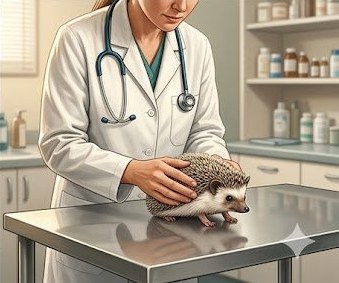
Questions to Ask a Prospective Exotic Vet
Before bringing your animal in for care, ask:
- Have you treated [specific species] before, and how many [species] are currently in your patient population?
- Are you familiar with [specific health condition common to the species]?
- Do you have access to the specialized equipment needed for [species] — for example, a gram scale for small mammals, or appropriate anesthetic protocols for reptiles?
- What is your after-hours emergency protocol for exotic patients?
- Are you familiar with the legal status of this species in our state, and will you treat it without reporting to wildlife authorities?
The last question is worth asking explicitly: most veterinarians are not mandatory reporters for wildlife possession violations, and professional ethical obligations do not require them to report illegal possession. However, some vets will decline to treat species they know to be illegal in your state, both for ethical reasons and to avoid liability. Knowing this in advance helps you plan.
Emergency Exotic Animal Care
In a true emergency, after-hours exotic animal care is difficult to find. Options:
- Many 24-hour emergency animal hospitals will stabilize critically ill exotic animals even if they lack specialist expertise — call ahead to confirm
- Large metropolitan areas often have 24-hour emergency exotic practices; identify yours before you need it
- The Avian and Exotic Animal Hospital (AEAH) network has locations in several major US cities
- Keep your exotic vet's after-hours emergency number saved